
Contents
- 🌎 Introduction to Weather Conditions
- 🌫️ Understanding the Troposphere
- 🌡️ Temperature and Humidity
- 🌨️ Precipitation and Cloud Cover
- 🌪️ Extreme Weather Events
- 🌟 Climate vs. Weather
- 🌐 Global Weather Patterns
- 🚀 Weather Forecasting and Technology
- 🌿 Weather and the Environment
- 👥 Human Impact on Weather Conditions
- 💡 Future of Weather Research
- 📊 Conclusion and Further Study
- Frequently Asked Questions
- Related Topics
Overview
Weather conditions are the temporary and local manifestations of the Earth's atmosphere at a specific time and place, influenced by factors such as temperature, humidity, cloudiness, wind, and precipitation. The historian notes that ancient civilizations recognized patterns in weather, with the earliest recorded weather forecasts dating back to 350 BCE in ancient Greece. However, the skeptic questions the accuracy of modern weather forecasting, citing the limitations of current models and the unpredictability of certain phenomena like tornadoes. The fan acknowledges the cultural resonance of extreme weather events, such as hurricanes and droughts, which have inspired countless works of art and literature. From an engineering perspective, understanding weather conditions is crucial for designing infrastructure, predicting natural disasters, and mitigating the impacts of climate change. As the futurist looks ahead, they wonder how emerging technologies like satellite imaging and artificial intelligence will revolutionize weather forecasting and our ability to respond to severe weather events, with some estimates suggesting that improved forecasting could save up to $1 billion annually in the United States alone.
🌎 Introduction to Weather Conditions
The study of weather conditions is a complex and multifaceted field that has captivated humans for centuries. Atmospheric Science is the branch of science that deals with the study of the Earth's atmosphere, including weather and climate. Weather refers to the state of the Earth's atmosphere at a specific place and time, typically described in terms of Temperature, Humidity, Cloud Cover, and stability. The Troposphere is the lowest layer of the Earth's atmosphere, where most weather phenomena occur. Understanding weather conditions is crucial for predicting Natural Disasters and mitigating their impact on human populations.
🌫️ Understanding the Troposphere
The Troposphere is the lowest layer of the Earth's atmosphere, extending up to about 12 kilometers above the Earth's surface. It is the layer where most weather phenomena occur, including Cloud Formation, Precipitation, and Wind Patterns. The troposphere is characterized by decreasing temperature with increasing altitude, which is why Mountain Climates are generally cooler than Valley Climates. The Stratosphere lies above the troposphere, and it is a stable layer with little vertical movement of air. The study of the troposphere is essential for understanding Weather Forecasting and Climate Modeling.
🌡️ Temperature and Humidity
Temperature and humidity are two of the most important factors that determine weather conditions. Temperature is a measure of the average kinetic energy of the particles in a substance, while Humidity is a measure of the amount of water vapor in the air. The combination of temperature and humidity determines the Heat Index, which is a measure of how hot it feels outside. The Dew Point is another important factor that determines the amount of moisture in the air. Understanding temperature and humidity is crucial for predicting Weather Patterns and Climate Trends. The Greenhouse Effect is a phenomenon that occurs when certain gases in the atmosphere, such as Carbon Dioxide and Methane, trap heat and contribute to global warming.
🌨️ Precipitation and Cloud Cover
Precipitation and cloud cover are two of the most visible aspects of weather conditions. Precipitation occurs when water vapor in the air condenses and falls to the ground, while Cloud Cover refers to the amount of cloudiness in the sky. The Water Cycle is the process by which water evaporates from the oceans and lakes, condenses into clouds, and precipitates back to the Earth. Understanding precipitation and cloud cover is essential for predicting Floods and Droughts. The Cloud Formation process is complex and involves the interaction of many factors, including Temperature, Humidity, and Wind Patterns.
🌪️ Extreme Weather Events
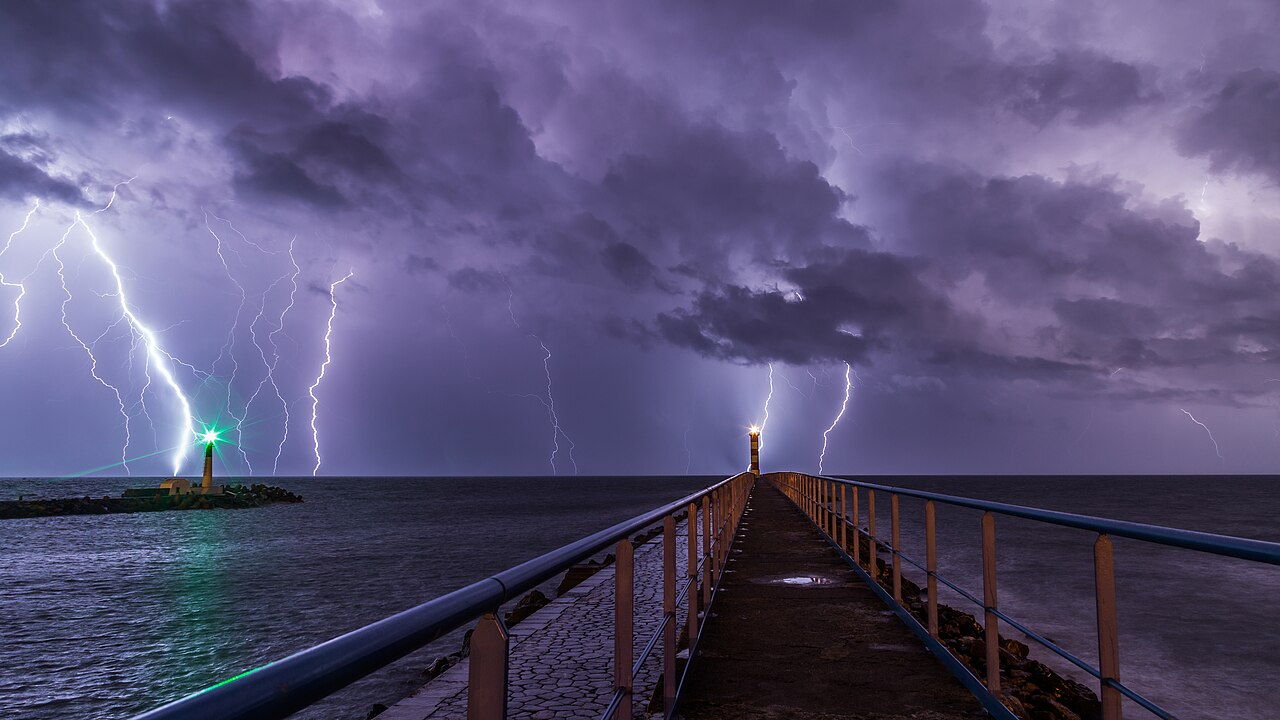
Extreme weather events, such as Hurricanes, Tornadoes, and Blizzards, are a major concern for human populations. These events can cause significant damage to infrastructure and loss of life. Understanding the causes of extreme weather events is crucial for predicting and mitigating their impact. The El Nino-Southern Oscillation is a phenomenon that occurs when the surface temperature of the Pacific Ocean warms up, leading to extreme weather events such as Droughts and Floods. The Polar Vortex is another phenomenon that can lead to extreme cold snaps and Winter Storms.
🌟 Climate vs. Weather
Climate and weather are two related but distinct concepts. Climate refers to the average atmospheric conditions over a long period of time, while Weather refers to the day-to-day conditions. Understanding the difference between climate and weather is essential for predicting Climate Change and its impact on human populations. The Paris Agreement is an international agreement that aims to mitigate climate change by reducing greenhouse gas emissions. The IPCC is the Intergovernmental Panel on Climate Change, which provides scientific guidance on climate change and its impacts.
🌐 Global Weather Patterns
Global weather patterns are influenced by a variety of factors, including Latitude, Longitude, and Altitude. The Jet Stream is a fast-moving band of air that can influence weather patterns by bringing warm or cold air from other regions. The Trade Winds are a set of winds that blow from the east and northeast in the tropics, and they play a crucial role in shaping global weather patterns. Understanding global weather patterns is essential for predicting Weather Forecasting and Climate Modeling. The Gulf Stream is a warm ocean current that originates in the Gulf of Mexico and flows northward along the eastern coast of the United States.
🚀 Weather Forecasting and Technology
Weather forecasting and technology have improved significantly over the years, allowing for more accurate predictions of weather conditions. Radar Technology uses radio waves to detect precipitation and other weather phenomena, while Satellite Imagery uses satellites in orbit around the Earth to capture images of the atmosphere and oceans. The Weather Forecasting Models use complex algorithms and data from various sources to predict weather patterns. Understanding weather forecasting and technology is essential for predicting and mitigating the impact of extreme weather events. The Nowcasting technique uses current weather conditions and radar data to predict the weather in the short term.
🌿 Weather and the Environment
Weather and the environment are closely linked, and changes in weather patterns can have significant impacts on ecosystems and human populations. The Biodiversity of an ecosystem can be affected by changes in weather patterns, such as Droughts and Floods. The Ecosystem Services provided by natural ecosystems, such as Air Pollution reduction and Water Filtration, can be impacted by changes in weather patterns. Understanding the relationship between weather and the environment is essential for predicting and mitigating the impact of climate change. The Sustainable Development goals aim to promote economic growth and development while protecting the environment and mitigating climate change.
👥 Human Impact on Weather Conditions
Human impact on weather conditions is a significant concern, as human activities such as Deforestation and Greenhouse Gas Emissions can contribute to climate change. The Kyoto Protocol is an international agreement that aims to reduce greenhouse gas emissions and mitigate climate change. Understanding the human impact on weather conditions is essential for predicting and mitigating the impact of climate change. The Renewable Energy sources, such as Solar Energy and Wind Energy, can help reduce greenhouse gas emissions and mitigate climate change.
💡 Future of Weather Research
The future of weather research is exciting and rapidly evolving, with new technologies and techniques being developed to improve weather forecasting and climate modeling. The Artificial Intelligence and Machine Learning techniques can be used to improve weather forecasting models and predict extreme weather events. The Internet of Things can provide real-time data on weather conditions, allowing for more accurate predictions and warnings. Understanding the future of weather research is essential for predicting and mitigating the impact of climate change. The Climate Resilience and Disaster Risk Reduction strategies can help communities prepare for and respond to extreme weather events.
📊 Conclusion and Further Study
In conclusion, weather conditions are a complex and multifaceted field that has captivated humans for centuries. Understanding weather conditions is crucial for predicting and mitigating the impact of extreme weather events and climate change. The study of weather conditions involves the interaction of many factors, including Temperature, Humidity, Cloud Cover, and Wind Patterns. Further research is needed to improve weather forecasting and climate modeling, and to mitigate the impact of climate change on human populations. The Weather Forecasting and Climate Modeling techniques can be used to predict and prepare for extreme weather events, and to promote Sustainable Development and Climate Resilience.
Key Facts
- Year
- 2023
- Origin
- Ancient Civilizations
- Category
- Environmental Science
- Type
- Natural Phenomenon
Frequently Asked Questions
What is the difference between weather and climate?
Weather refers to the day-to-day conditions of the atmosphere, while climate refers to the average atmospheric conditions over a long period of time. Understanding the difference between weather and climate is essential for predicting climate change and its impact on human populations. The Paris Agreement is an international agreement that aims to mitigate climate change by reducing greenhouse gas emissions.
What are the main factors that determine weather conditions?
The main factors that determine weather conditions include Temperature, Humidity, Cloud Cover, and Wind Patterns. Understanding these factors is crucial for predicting weather patterns and climate trends. The Greenhouse Effect is a phenomenon that occurs when certain gases in the atmosphere, such as Carbon Dioxide and Methane, trap heat and contribute to global warming.
How do human activities impact weather conditions?
Human activities such as Deforestation and Greenhouse Gas Emissions can contribute to climate change and impact weather conditions. Understanding the human impact on weather conditions is essential for predicting and mitigating the impact of climate change. The Renewable Energy sources, such as Solar Energy and Wind Energy, can help reduce greenhouse gas emissions and mitigate climate change.
What is the future of weather research?
The future of weather research is exciting and rapidly evolving, with new technologies and techniques being developed to improve weather forecasting and climate modeling. The Artificial Intelligence and Machine Learning techniques can be used to improve weather forecasting models and predict extreme weather events. The Internet of Things can provide real-time data on weather conditions, allowing for more accurate predictions and warnings.
How can we mitigate the impact of climate change on human populations?
Mitigating the impact of climate change on human populations requires a multi-faceted approach, including reducing greenhouse gas emissions, promoting Sustainable Development, and improving weather forecasting and climate modeling. The Climate Resilience and Disaster Risk Reduction strategies can help communities prepare for and respond to extreme weather events. The Weather Forecasting and Climate Modeling techniques can be used to predict and prepare for extreme weather events.
What is the importance of understanding weather conditions?
Understanding weather conditions is crucial for predicting and mitigating the impact of extreme weather events and climate change. The study of weather conditions involves the interaction of many factors, including Temperature, Humidity, Cloud Cover, and Wind Patterns. Further research is needed to improve weather forecasting and climate modeling, and to mitigate the impact of climate change on human populations.
How can we improve weather forecasting and climate modeling?
Improving weather forecasting and climate modeling requires the development of new technologies and techniques, such as Artificial Intelligence and Machine Learning. The Internet of Things can provide real-time data on weather conditions, allowing for more accurate predictions and warnings. Understanding the human impact on weather conditions is essential for predicting and mitigating the impact of climate change.